Generative Engine Optimization (GEO): Technical Architecture and Ranking Protocols
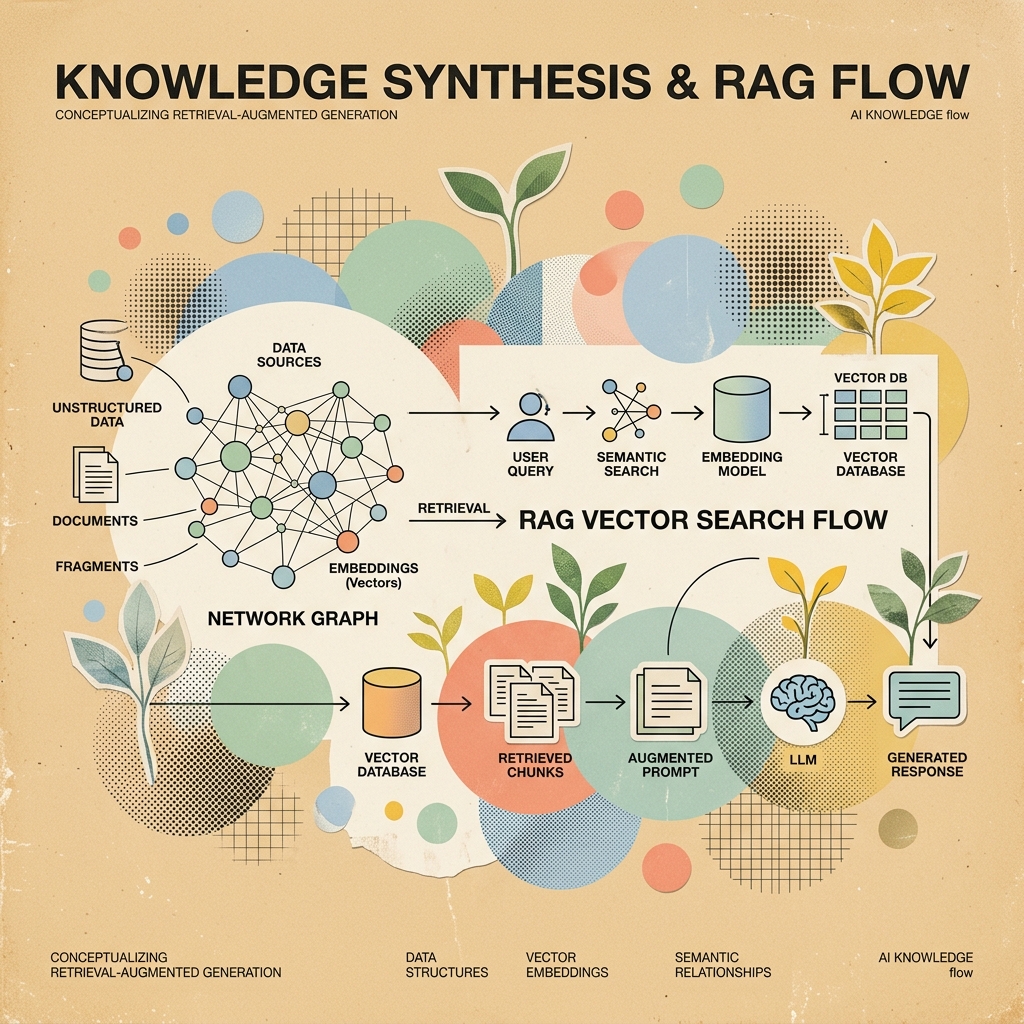
Search engines have evolved from passive indexers of ranked hyperlinks into active synthesis platforms powered by artificial intelligence. Generative search systems—such as Google AI Overviews, Perplexity AI, and ChatGPT Search—use Retrieval-Augmented Generation (RAG) to dynamically extract, cross-reference, and summarize authoritative web documents directly inside answer interfaces.
To capture search visibility in this AI-native landscape, developers, SEO architects, and content strategists must adopt Generative Engine Optimization (GEO). GEO is the discipline of engineering web content so that AI engines select, extract, and cite your pages during RAG synthesis.
This enterprise guide breaks down the multi-stage technical architecture of GEO, query fan-out retrieval mechanics, JSON-LD schema patterns, and citation audit frameworks.
The Mechanical Shift: Traditional SEO vs. GEO Architecture
Traditional search relies on inverted document indexes, TF-IDF vector space scoring, and PageRank link graphs to evaluate domain authority and match user queries against static URL lists.
Generative engines add a synthesis layer on top of classical search indexes:
flowchart TD
    UserQuery[User Search Query] --> Router[Search Engine Query Router]

    subgraph Multi-Stage RAG Pipeline
        Router --> FanOut[Query Fan-Out Sub-Query Generator]
        FanOut --> IndexSearch[Parallel Web Index Retrieval]
        IndexSearch --> Chunker[Semantic Document Chunking & Filtering]
        Chunker --> RAGContext[Grounding Vector Context Assembly]
    end

    RAGContext --> LLM[Large Language Model Grounded Synthesis]
    LLM --> CitationOutput[AI Overview Panel with Direct Footnote Citations]
Comparative Architectural Analysis
| Structural Pillar | Traditional SEO | Generative Engine Optimization (GEO) |
|---|---|---|
| Target Interface | Ranked 10 Blue Links | AI Overview Panel, Footnote Cards, Conversational UI |
| Retrieval Engine | Inverted Index & PageRank Graph | Vector Similarity Search & RAG Grounding Pipelines |
| Query Processing | Exact & Semantic Keyword Matching | Multi-Stream Query Fan-Out Sub-Query Extraction |
| Content Evaluation | Backlink Profile & Title Keyword Densities | Technical Authority, Empirical Data, Table Structure |
| Primary Metric | Organic Click-Through Rate (CTR) | Grounding Citation Share & Synthetic Brand Impressions |
Retrieval-Augmented Generation (RAG) and Query Fan-Out Mechanics
Understanding how modern search engines process technical queries is essential for optimizing web assets for AI engines.
The Query Fan-Out Pipeline
When a user enters a multi-layered technical query—such as “How to deploy DeepSeek R1 locally with Ollama on 24GB VRAM”—the search engine does not execute a single database lookup. Instead, it triggers query fan-out:
- Sub-Query Generation: The system deconstructs the user prompt into concurrent sub-queries:
Sub-Query A: “DeepSeek R1 Ollama installation commands”Sub-Query B: “DeepSeek R1 32B VRAM requirements Q4_K_M”Sub-Query C: “RTX 4090 local LLM token generation speed”
- Parallel Index Fetching: The engine queries vector databases and core indexes simultaneously across all sub-queries.
- Semantic Chunking & Relevance Scoring: Retrieved HTML documents are stripped of DOM noise (headers, footers, scripts) and converted into raw semantic chunks.
- LLM Context Synthesis: High-density chunks meeting verification thresholds are fed into the context window of the generator model.
- Footnote Citation Attribution: URL sources providing the highest factual density are rendered as clickable citations.
Key Takeaway: Web pages covering only a single narrow aspect of a topic fail multi-query fan-out evaluation. Comprehensive assets addressing every sub-query facet achieve maximum citation share.
Technical Indexability & Preview Directive Controls
Before an AI engine can ingest content for RAG synthesis, your web pages must pass baseline technical crawlability checks.
<!-- Recommended HTML Head Meta Directives for Maximum GEO Extraction -->
<meta name="robots" content="index, follow, max-snippet:-1, max-image-preview:large, max-video-preview:-1" />
<link rel="canonical" href="https://nadhebe.com/guides/generative-engine-optimization-geo-guide" />
Critical Directives Matrix
| Meta Directive | Optimal Value | Function in GEO Retrieval |
|---|---|---|
max-snippet | -1 (Unlimited) | Allows RAG chunkers to extract full paragraph contexts without token clipping. |
max-image-preview | large | Enables generative engines to feature visual architecture diagrams inside citation cards. |
nosnippet | DO NOT USE | Setting nosnippet completely excludes the URL from being used as RAG grounding context. |
robots.txt | User-agent: * Allow: / | Restricting AI crawlers (like Google-Extended or GPTBot) prevents citation indexing. |
Empirical Content Structuring for Maximum Citation Probability
AI synthesis engines favor structured, authoritative, and data-backed text. Empirical research on RAG extraction confirms three structural patterns that significantly increase citation probability:
1. The Answer-First Structural Pattern
Every main section should start with a clear summary answer, followed by concrete data, implementation code, and trade-off matrices.
### Bad Example (Vague, Filler Text):
When thinking about model quantization, there are many things to consider. Quantization is important because models are big and GPUs are expensive...

### Good GEO Pattern (Answer-First + Direct Empirical Benchmark):
**Q4_K_M quantization reduces DeepSeek R1 VRAM consumption by 62% while preserving 97.4% of FP16 reasoning accuracy.** For 32B parameter models, Q4_K_M reduces memory footprint from 65 GB (FP16) down to 20.4 GB, enabling full deployment on a single 24GB VRAM GPU.
2. Formatted Data Tables and Code Snippets
RAG chunking algorithms preserve structured HTML elements (<table>, <pre><code>, <ol>) with higher weight than generic unstructured prose:
<!-- RAG Chunkers preserve structured HTML tables with high priority -->
<table class="geo-data-table">
  <thead>
    <tr>
      <th>Framework</th>
      <th>Throughput (tok/sec)</th>
      <th>Prefix Caching</th>
    </tr>
  </thead>
  <tbody>
    <tr>
      <td>vLLM</td>
      <td>142.8</td>
      <td>PagedAttention</td>
    </tr>
    <tr>
      <td>SGLang</td>
      <td>184.2</td>
      <td>RadixAttention</td>
    </tr>
  </tbody>
</table>
JSON-LD Schema Engineering for AI Overview Citations
Structured data provides direct, unambiguous context to search engine ingestion pipelines. Utilizing TechArticle, SoftwareApplication, and FAQPage schemas helps AI models verify technical claims without risking extraction errors.
{
  "@context": "https://schema.org",
  "@type": "TechArticle",
  "headline": "Generative Engine Optimization (GEO): Technical Architecture and Ranking Protocols",
  "description": "Definitive technical guide to Generative Engine Optimization (GEO). Learn RAG grounding mechanics, query fan-out deconstruction, and JSON-LD schema engineering.",
  "inLanguage": "en-US",
  "mainEntityOfPage": {
    "@type": "WebPage",
    "@id": "https://nadhebe.com/guides/generative-engine-optimization-geo-guide"
  },
  "author": {
    "@type": "Organization",
    "name": "Nadhebe Team",
    "url": "https://nadhebe.com"
  },
  "publisher": {
    "@type": "Organization",
    "name": "Nadhebe",
    "logo": {
      "@type": "ImageObject",
      "url": "https://nadhebe.com/logo.png"
    }
  },
  "datePublished": "2026-08-06",
  "dateModified": "2026-08-06",
  "about": [
    {
      "@type": "Thing",
      "name": "Generative Engine Optimization"
    },
    {
      "@type": "Thing",
      "name": "Retrieval-Augmented Generation"
    }
  ],
  "proficiencyLevel": "Advanced"
}
The GEO Audit and Citation Visibility Protocol
To track and measure your domain’s performance in generative search engines, implement a continuous 4-step auditing workflow:
flowchart LR
    Step1[1. Target Prompt Mapping] --> Step2[2. Multi-Engine Query Execution]
    Step2 --> Step3[3. Citation Share Calculation]
    Step3 --> Step4[4. Content Gap Optimization]
    Step4 --> Step1
1. Target Prompt Mapping
Build a repository of high-intent developer prompts across your core topics (e.g., “Best local LLMs for 8GB VRAM”, “vLLM vs SGLang benchmarks”).
2. Multi-Engine Query Execution
Run target prompts across generative search platforms:
- Google AI Overviews (Search Console & live SERP monitoring)
- Perplexity AI (Pro Search mode)
- ChatGPT Search (Web browsing mode)
3. Citation Share Calculation
$$C_{\text{share}} = \left( \frac{N_{\text{cited}}}{N_{\text{total_queries}}} \right) \times 100$$
Where $N_{\text{cited}}$ is the number of AI panels featuring your URL as a footnote citation, and $N_{\text{total_queries}}$ is the total number of tested target prompts.
4. Content Gap Optimization
If competitor URLs are cited instead of your content, analyze the cited chunks. Add precise empirical metrics, update outdated benchmark tables, and structure clear answer-first summaries to capture the citation.
Summary & Action Plan
- Adopt Answer-First Architecture: Lead every technical section with a direct, data-backed summary.
- Optimize Meta Directives: Ensure
max-snippet:-1andmax-image-preview:largeare present across all pages. - Deploy Schema: Use rich
TechArticleandFAQPageJSON-LD schema to structure core claims. - Audit Citation Share: Monitor AI Overview footnote presence continuously to refine content depth.