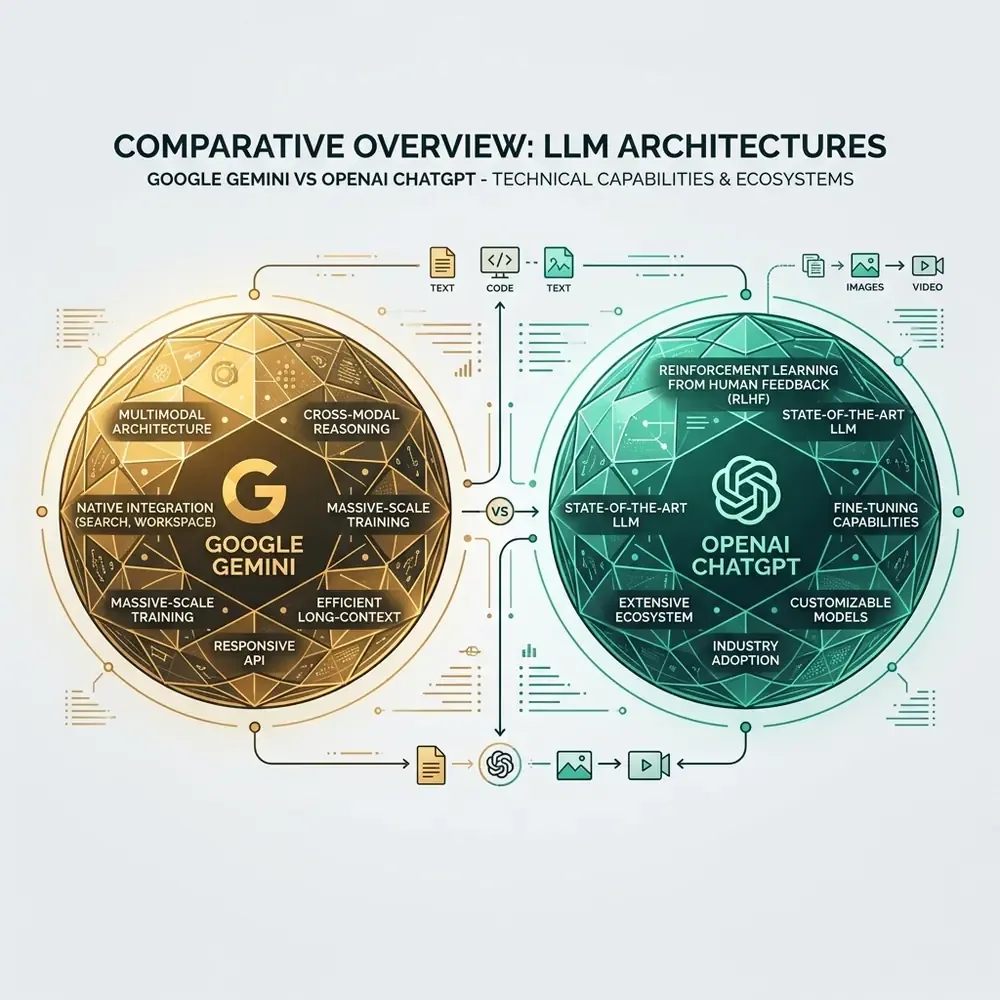
Google Gemini and OpenAI ChatGPT remain the top two flagship AI platforms for developers and enterprise teams. This head-to-head review evaluates performance across coding, mathematical reasoning, long-context retrieval, and developer API economics.
Comparison Summary Table
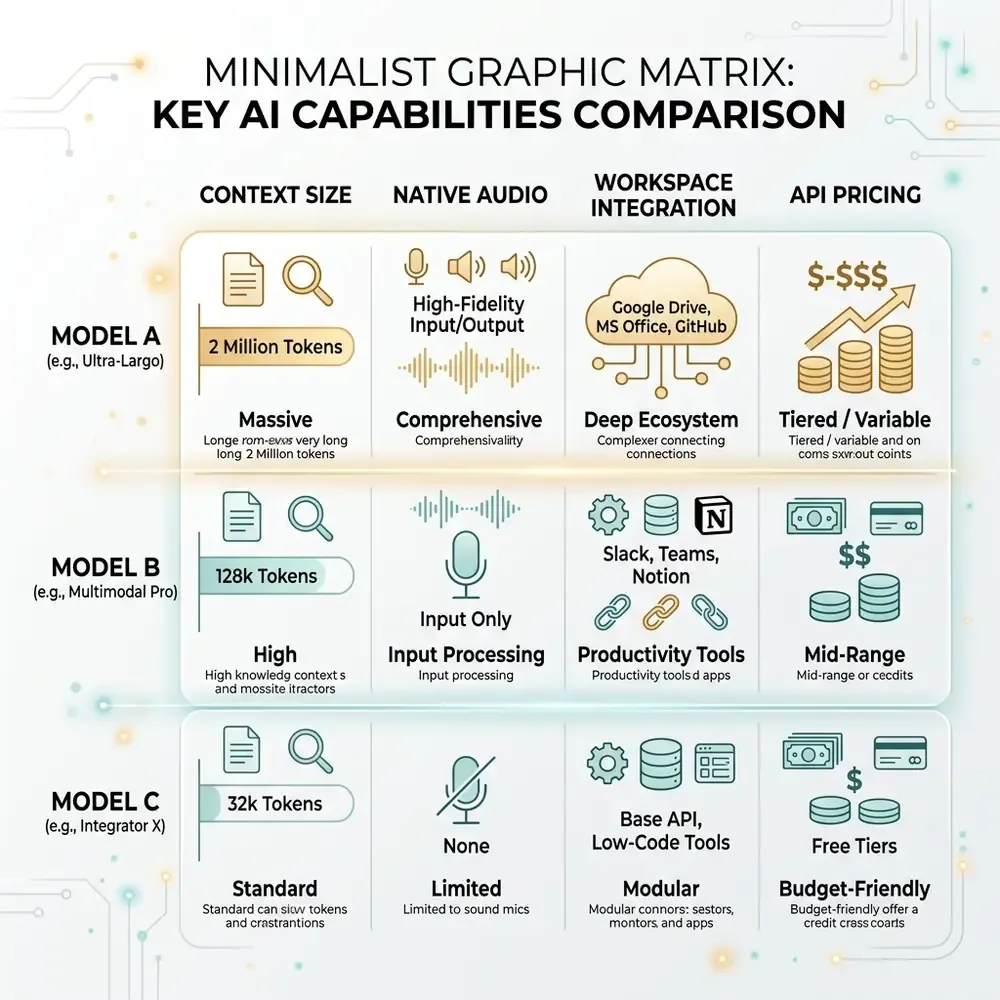
| Metric | Google Gemini (2.0 / 3.x) | OpenAI ChatGPT (GPT-4o / GPT-5) |
|---|---|---|
| Max Context Window | 2,000,000 Tokens | 128,000 Tokens |
| Native Multimodal Audio | Real-time 2-way native audio | Advanced Voice Mode |
| Google Workspace Integration | Native (Docs, Gmail, Drive) | Limited via third-party actions |
| API Input Price (Flash/Mini) | $0.075 / 1M tokens | $0.150 / 1M tokens |
| Python Code Execution | Built-in Cloud Sandbox | Code Interpreter / Advanced Data Analysis |
Strengths of Gemini
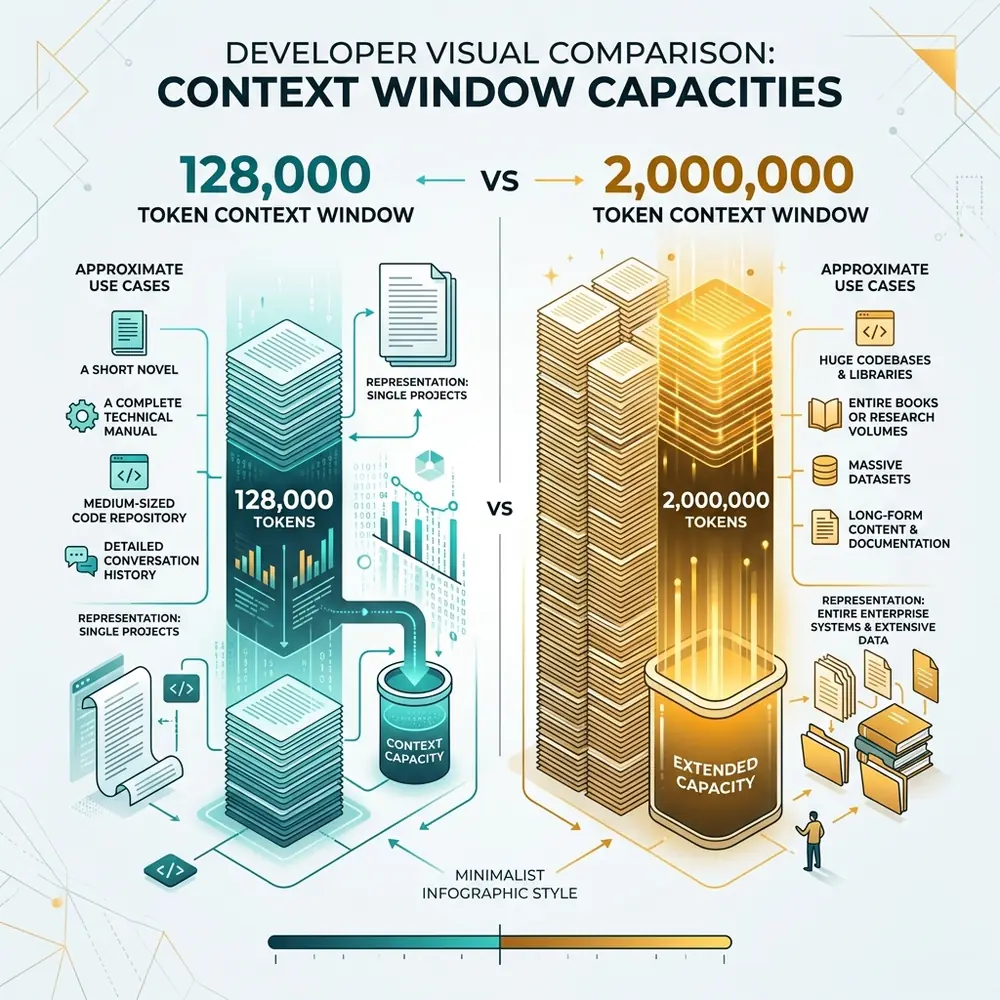
- Massive 2 Million Token Context: Gemini can ingest full codebases, multi-hour video recordings, or hundreds of documentation pages without retrieval chunking loss.
- Deep Google Ecosystem Synergy: Seamlessly drafts emails in Gmail, generates slides in Google Slides, and queries Google Drive files natively.
Strengths of ChatGPT
- Widespread Plugin & Custom GPT Ecosystem: Thousands of pre-built Custom GPTs tailored for specific domain tasks.
- Polished Reasoning Models (o1/o3): Strong performance on competition-level mathematics and logic benchmarks.
Final Verdict
- Choose Gemini if: You work within Google Workspace, need to analyze long documents/codebases, or want ultra-cost-effective API endpoints.
- Choose ChatGPT if: You rely on Custom GPTs, specific voice workflows, or complex competitive math reasoning.