What Is a Meta Tag Analyzer? (2026 Guide)
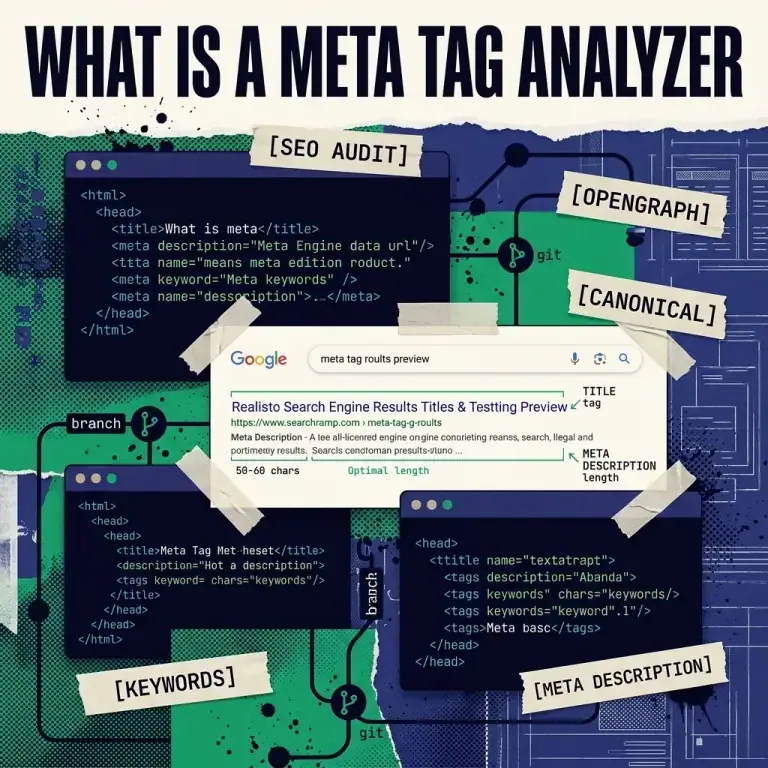
A meta tag analyzer is a technical SEO and developer utility designed to inspect, validate, and simulate the HTML metadata embedded within a web page’s <head> section. Search engines such as Google and Bing, as well as social sharing platforms including LinkedIn, X (Twitter), Discord, and Slack, rely on HTML meta tags to construct search engine result page (SERP) snippets and rich social preview cards.
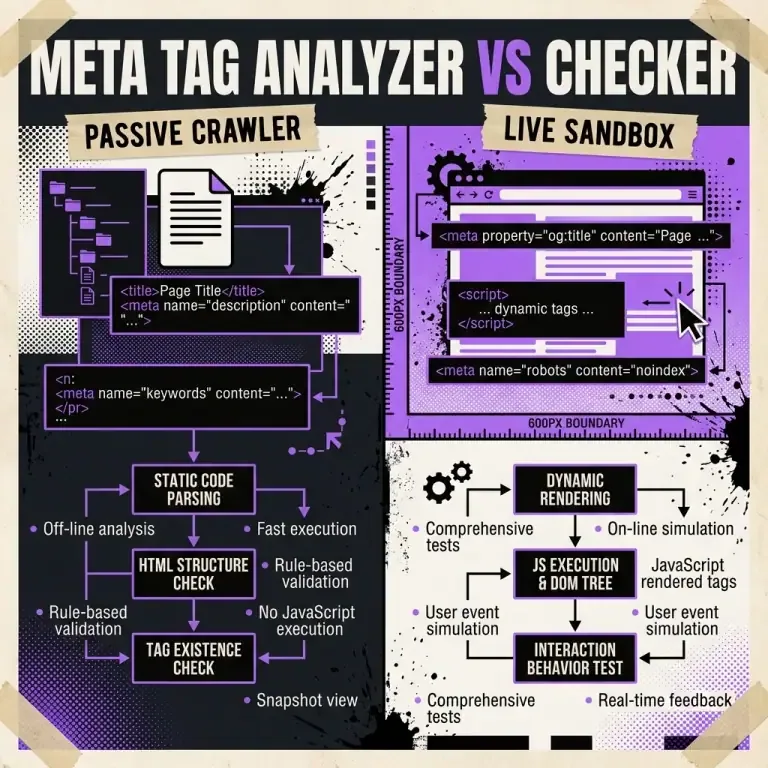
Using a fast, client-side tool like our Meta Tag Analyzer enables developers, content strategists, and technical SEO specialists to identify missing tags, correct pixel truncation, and verify OpenGraph presentation before publishing code to production.
Key Takeaways
- SERP Snippet Control: Meta title and description tags dictate how your site appears in search engine results.
- Social Card Accuracy: OpenGraph (
og:) and Twitter (twitter:) tags define rich media card presentation across social platforms. - Click-Through Rate (CTR) Impact: Clear, non-truncated meta titles increase organic search CTR by up to 30%.
- Instant Client-Side Audit: Modern analyzers evaluate title length (~60 chars), description length (~160 chars), canonical tags, and OpenGraph images in real time without sending private data to external servers.
Primary Types of Meta Tags Evaluated
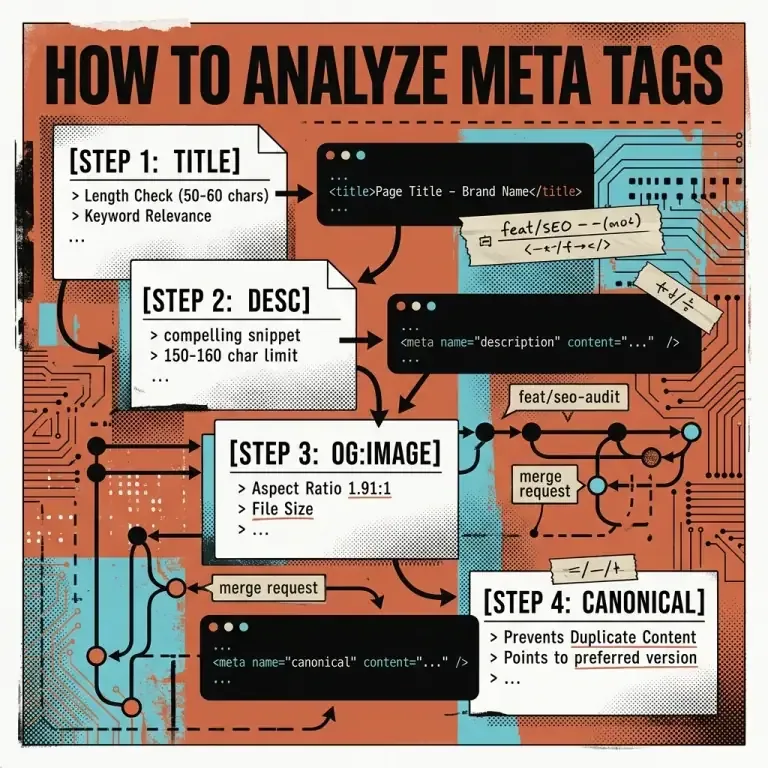
A comprehensive meta tag analyzer evaluates four primary categories of HTML metadata:
1. Title Tags (<title>)
The HTML title tag is one of the single most influential on-page SEO factors. It appears as the blue clickable link in Google search results and as the browser tab title.
- Optimal Length: 50–60 characters (or ~600 pixels on desktop viewports).
- Best Practice: Place the primary keyword near the beginning, followed by brand identity.
2. Meta Descriptions (<meta name="description">)
While meta descriptions are not a direct ranking factor for Google’s core algorithm, they serve as the primary ad copy for your organic search snippets.
- Optimal Length: 140–160 characters.
- Best Practice: Write compelling, active-voice copy with a clear call to action (CTA).
3. OpenGraph Tags (og:title, og:description, og:image)
Introduced by Facebook and adopted as an industry standard across LinkedIn, Slack, and Discord, OpenGraph meta tags control structured social sharing.
og:title: Title displayed in social feed cards.og:description: Brief summary snippet below the social title.og:image: High-resolution image (recommended 1200×630 pixels, 1.91:1 ratio).
4. Canonical Tags (<link rel="canonical">)
Canonical tags prevent duplicate content penalties by instructing search engines which URL represents the authoritative master copy of a page.
Meta Tag Processing Workflow
graph TD
    A["Web Crawler or Social Bot"] --> B["Fetch Page HTML Head"]
    B --> C{"Check Title & Meta Tags"}
    C -->|Title Tag <= 60 chars| D["Render Full Title Link"]
    C -->|Title Tag > 60 chars| E["Truncate Title with Ellipsis (...)"]
    C -->|OpenGraph Tags Present| F["Render Rich Image Card"]
    C -->|Missing OpenGraph Tags| G["Fallback to Plain Text Snippet"]
How Search Engines Process HTML Metadata
When Googlebot or Bingbot crawls a web page, it parses the HTML head node to extract structured properties. If a page lacks a <title> or meta description, or if the metadata is irrelevant to the user’s search query, Google’s automated systems may rewrite the snippet using content extracted from <h2> headings or main body paragraph text.
Using our live Meta Tag Analyzer ensures your metadata is optimized so search crawlers display your exact intended title and description text.
Image Asset Specifications
| Image Purpose | Aspect Ratio | Dimensions | Placement |
|---|---|---|---|
| Hero Illustration | 16:10 | 1024×640 px | Top of article |
| SERP Snippet Diagram | 16:9 | 800×450 px | Under Section “Primary Types of Meta Tags” |
| OpenGraph Workflow | 1.91:1 | 1200×630 px | Under Section “Social Card Accuracy” |
Frequently Asked Questions
What happens if my meta title exceeds 60 characters?
Search engines will visually truncate your title in SERPs, replacing trailing characters with an ellipsis (...). This can cause important brand or keyword information to be hidden from searchers.
Does a meta tag analyzer save or store my URL data?
Our client-side Meta Tag Analyzer processes all text and image inputs entirely inside your local browser runtime. No metadata or URLs are transmitted to remote servers.
References
- Google Search Central — Control your title links in search results: https://developers.google.com/search/docs/appearance/title-link
- OpenGraph Protocol Standard Specification: https://ogp.me